
This post is also available in:
And now for what you have all been waiting for – or at least what you cannot avoid if you follow our exploits.
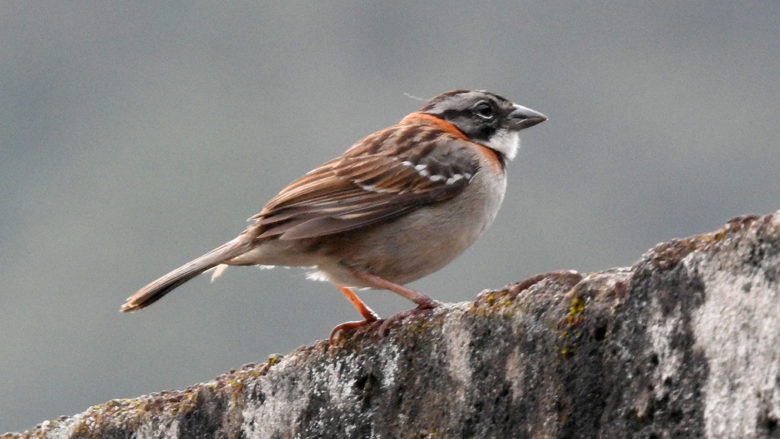
We have seen birds, including species we have not seen before. But we haven’t spent much time on birding or birdwatching so far, and therefore have not seen so many yet. The two most common birds we have seen are Rufous-collared Sparrow and Eared Dove. These two species are just everywhere.

Rufous-collered Sparrow. A very common bird in Ecuador.
Urban birding Quito
During the first week it was mostly urban birding, as we spent most of the time in Quito – and it’s a fairly big city, let me tell you (an idiom I find wildly annoying, but there you go). The city has many parks and you can easily see birds in many of them. But as mentioned, time flies and we have not done much exploring so far.
We drove with El Teleferico de Quito up to the paramo on the Pinchincha volcano. The 18 minutes cable car ride transports you to approximately 4000 meters above sea level. There is supposed to be a magnificent view of Quito – but not on the day we were there. The view was obscured by clouds, so we only got a few glimpses of the city far below. But this did not stop us from going for a walk hoping to see some of the species that dwell in the heights. There weren’t many birds, but those we saw were new species: Brown-bellied Swallow, Stout-billed Cinclodes, Black-billed Shrike-Tyrant. And while we sat and enjoyed the coca we had brought we spotted a Plumbeous Sierre-Finch. In addition, we also heard Paramo Pipit and saw what might have been a Broad-Winged Hawk..
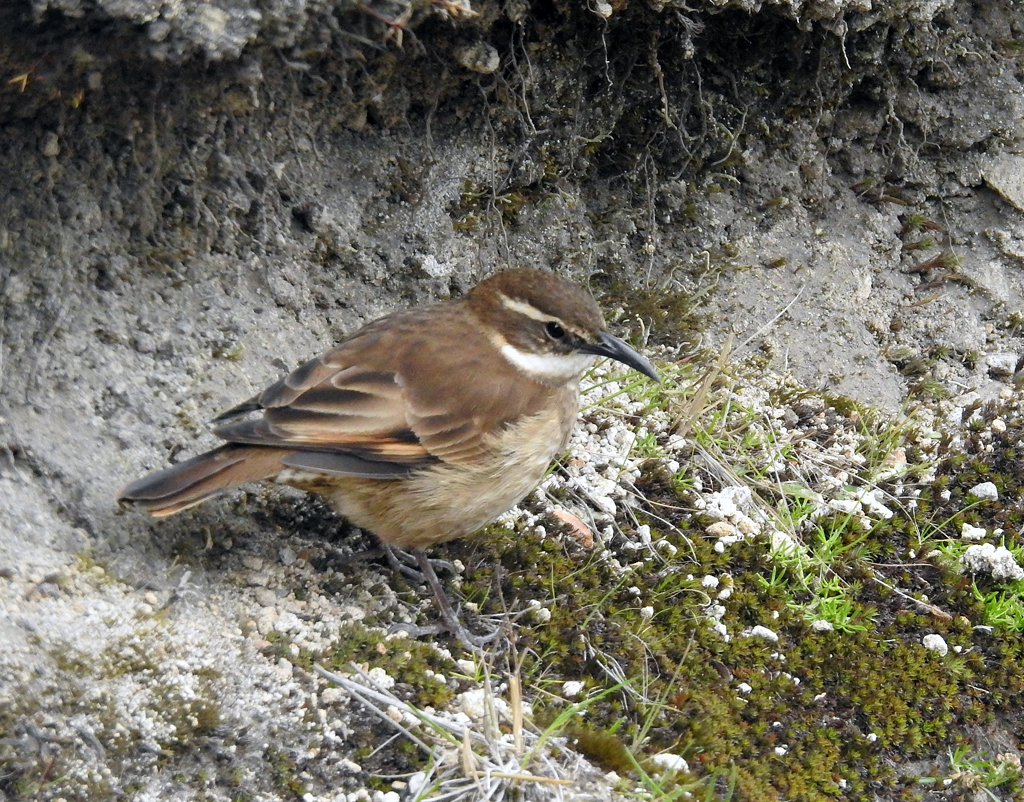
Stout-billed-cinclodes not far from El Teleferico. Pichincha, Quito, Ecuador.
We have been to Parque La Carolina not far from where we live, a couple of times. Here you will also find Jardin de Botanico – the botanical garden – which we visited the other day, specifically to do some bird watching. Entrance costs 3.50 $ per person, but then you can stay there the whole day. It is a very nice botanical garden with a lot to look at – both plants, birds and butterflies. We spent most time on the birds and got some more species on the list. There were three species of flowerpiercer: Black, Masked and Rusty Flowerpiercer. Of other exciting species we saw Vermilion Flycatcher – one of our target species, which we had already seen at La Mitad del Mundo the week before. There were at least two species of hummingbirds: Sparkling Violetear and Black-tailed Trainbaerer, which is quite fun to see, because of its long tail.

One of our many “target-species”. Vermillion Flycatcher. La Mitad del Mundo, Ecuador.
We have made an Albicilla Explorer video from Jardin de Botanico and you can watch it here [the post continue below the video]:
https://www.facebook.com/AlbicillaExplorer/videos/305495386927991/
Birding in Baños de Agua Santa
Most of our second week in Ecuador we spent in Baños, a four-hour drive from Quito. Baños is located in the eastern part of Andes Plateau. The city itself is situated almost a thousand meters lower than Quito, but it is also surrounded by mountains and volcanoes. There was a chance to see some slightly different species.
We were in Baños in connection with our Spanish lessons, but we got up early and did some birding before breakfast and of course we brought our binoculars on the tours we took in the area. Amongst the birds we saw were Squirrel Cuckoo and the hummingbirds Sparkling Violetear, Black-tailed Trainbaerer, Mountain Velvet Breast, Collared Inca and White-bellied Woodstar. We also saw tanagers – Magpie, Blue-and-Gray, Yellow-throated, Lacrimos Mountain-Tanager and Golden Tanager. We saw a few species of Seedeaters, which were Tropical Kingbird, a species we expect to see a lot of the coming months. A couple of the days we also saw Black-backed Grosbeak, a beautiful yellow and black bird with a huge beak.
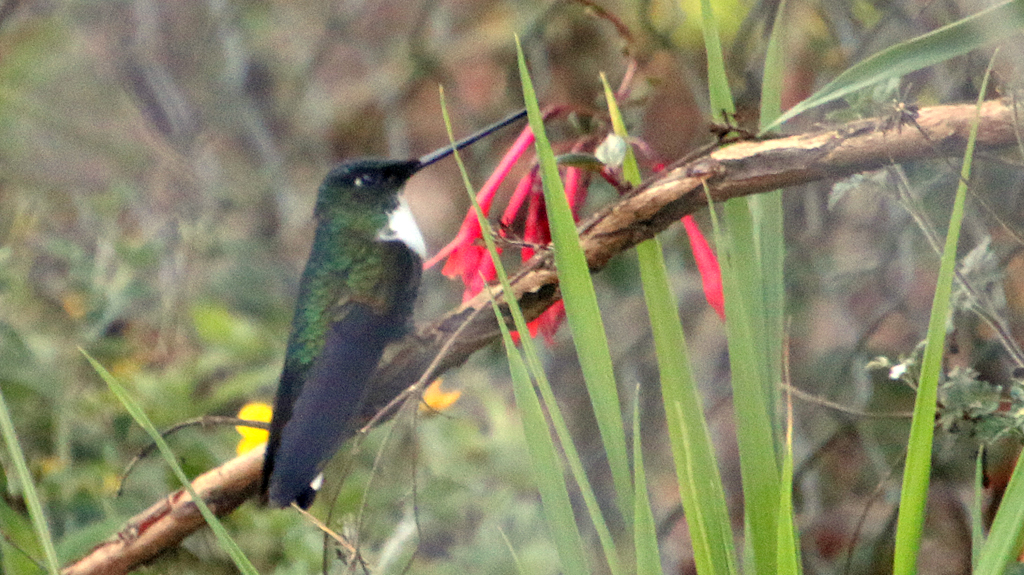
Collared Inca. Baños, Ecuador.

Slate-throated Redstart. Pailon del Diablo, Baños, Ecuador.
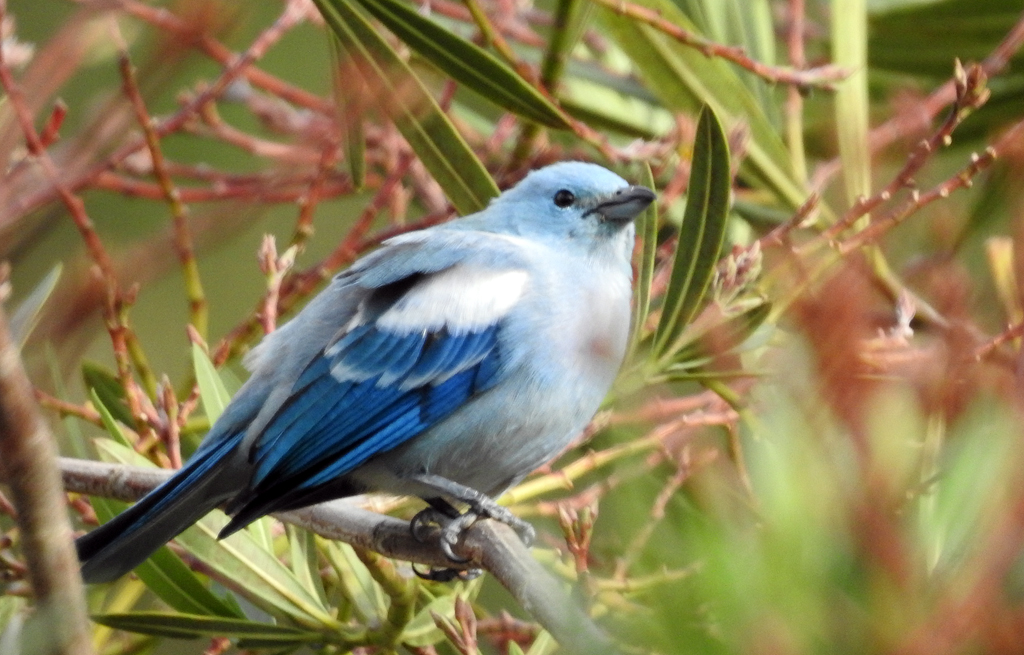
Blue Grey tanager. Baños, Eucador.

One of the species of hummingbird with long tailfeather. Black-tailed Trainbearer. Baños, Ecuador.

Black-backed Grosbeak. Baños, Eucador.
All photos and video © Bente Steffensen and Uffe Damm Andersen, unless otherwise stated.